Artist Advice
Chick Corea's “Cheap but Good Advice”
“Cheap but Good Advice for Playing Music in a Group”
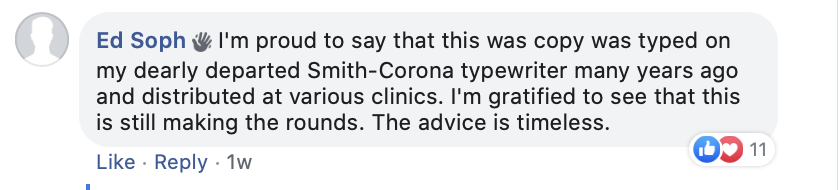
In 1985, Chick Corea gave a clinic and Q&A at the Berklee College of Music and handed out a one-page sheet titled “Cheap but Good Advice for Playing Music in a Group” — sixteen concise rules for group improvisation. The drummer and educator Ed Soph typed it up, and it has circulated among musicians ever since. (The Christian Science Monitor covered the clinic at the time.)
I first saw it taped to a music stand during a rehearsal at the Thelonious Monk Institute. Like Monk's advice to Steve Lacy and Elvin Jones' “Thoughts,” I return to it often, both playing and teaching.

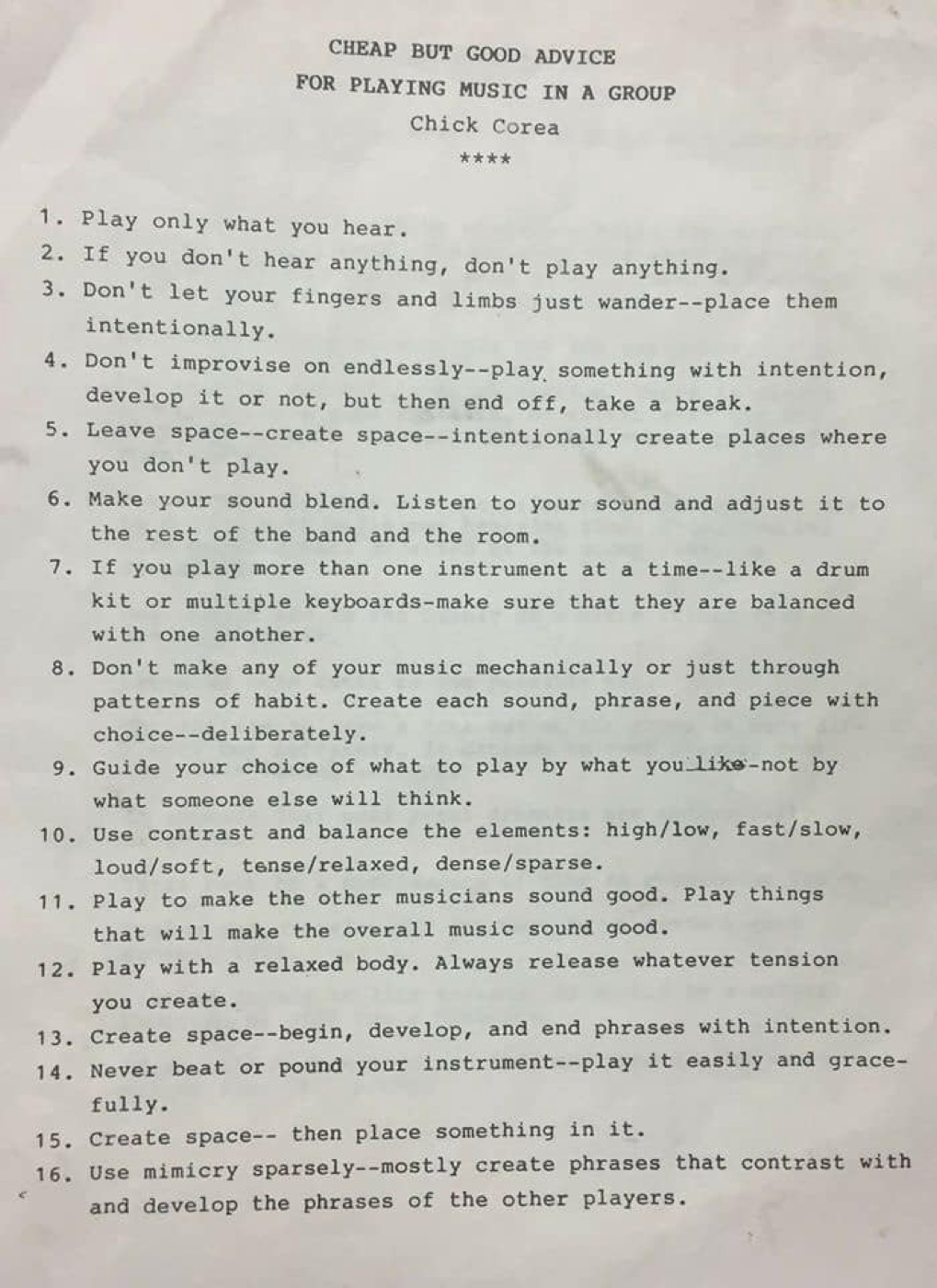
Cheap but Good Advice for Playing Music in a Group
- Play only what you hear.
- If you don't hear anything, don't play anything.
- Don't let your fingers and limbs wander — place them intentionally.
- Don't improvise on endlessly — play something with intention, develop it or not, but then end off, take a break.
- Leave space — create space — intentionally create places where you don't play.
- Make your sound blend. Listen to your sound and adjust it to the rest of the band and the room.
- If you play more than one instrument at a time — like a drum kit or multiple keyboards — make sure that they are balanced with one another.
- Don't make any of your music mechanically or just through patterns of habit. Create each sound, phrase, and piece with choice — deliberately.
- Guide your choice of what to play by what you like — not by what someone else will think.
- Use contrast and balance the elements: high/low, fast/slow, loud/soft, tense/relaxed, dense/sparse.
- Play to make the other musicians sound good. Play things that will make the overall music sound good.
- Play with a relaxed body. Always release whatever tension you create.
- Create space — begin, develop, and end phrases with intention.
- Never beat or pound your instrument — play it easily and gracefully.
- Create space — then place something in it.
- Use mimicry sparsely — mostly create phrases that contrast with and develop the phrases of the other players.
More Artist Advice
- Thelonious Monk's advice to Steve Lacy
- “Thoughts by Elvin” — Elvin Jones' advice
- Jazz Transcriptions — Chris Potter, Joshua Redman, and more